Monday, September 1, 2008


PATNA, India, Sept 1 (Reuters) - The Indian army and navy stepped up efforts on Monday to rescue hundreds of thousands of people marooned by floods, while rising river levels also rang alarm bells in neighbouring Bangladesh.
In India's impoverished eastern state of Bihar, villagers have been living on rooftops for days, while others are eating plants and leaves after exhausting food stocks.
Aid agencies said the Bihar government should have done more to anticipate the disaster and plan relief operations in a region hit by monsoon flooding every year.
"Lessons from the past disasters should be kept in mind while planning response," ActionAid said in a statement. "A long-term comprehensive response is necessary to deal with relief, recovery and disaster preparedness."
Three million people have been displaced from their homes and at least 90 killed by floods in Bihar, officials say, after the Kosi river burst a dam in Nepal, swamping hundreds of villages in Bihar and destroying 100,000 ha (250,000 acres) of farmlands.
Since the monsoon began in South Asia in June, more than 1,000 people have died in floods, with most of the casualties recorded in India's northern state of Uttar Pradesh in July.
In Bihar, hundreds of boats are being used to evacuate people but more are needed, while heavy rains over the past few days have hampered rescue and relief operations, officials said.
"Such is the extent of devastation that the forces deployed are proving too small," Pratyay Amrit, a senior state disaster management official, said on Monday.
The army, which had already deployed five columns of around 120 men, sent in another 14, officials said on Monday, while three naval companies were also asked to help.
The situation on the ground is getting desperate.
"We don't have any more food grain stocks left, and me and my family are all chewing plants and leaves to stay alive," Mohan Sharma said by telephone from Supaul district.
Television pictures showed people fighting to get places in boats, as soldiers in life jackets tried to restore order.
Over 467,000 people have been evacuated so far, but there are thousands still marooned. Activists and local media say the death toll could be many times higher than official estimates.
Some experts have blamed the floods on heavier monsoon rains caused by global warming, while others say authorities have failed to take preventive measures and improve infrastructure.
RISING RIVERS
In India's northeastern state of Assam, rising rivers broke mud embankments and swamped more than 100 villages, forcing 50,000 people from their homes.
Two people drowned overnight, raising the death toll in the northeast region to 34.
Authorities said at least 400,000 people were living in knee-deep water in villages along the border with Bangladesh.
In Bangladesh, about half a million people were marooned after several rivers in the north and central districts broke their banks and swamped villages and farmlands.
The Flood Forecasting Centre warned the flood situation could worsen in the next couple of days as the country's three major rivers were rising alarmingly.
|Reuters|

The bodies of Jill Foster, 49, and an unidentified man were found in the ruins of Osbaston House in Maesbrook, Shropshire, days after Tuesday's blaze.
Kirstie Foster, 15, and her father Christopher, 50, remain unaccounted for.
Police specialist search teams found the remains of a third person on Sunday evening, a spokesperson said.
Detectives have said they are treating the case as a murder inquiry.
Post-mortem tests revealed Mrs Foster had been shot in the head prior to the blaze, which police said was started deliberately at about 0500 BST last Tuesday.
Tests were being carried out to establish whether a rifle, which was legitimately owned by Mr Foster, was the murder weapon.
Officers said the cause of death for the second body, believed to be a man, still had to be established, along with the dead person's identity.
Three horses and four dogs were also found dead in different parts of the house. All had been shot.
Det Supt Jon Groves, of West Mercia Police, said it would take "some time" to remove the third body from the scene "due to its position".
However, he said police were hoping to remove it from the house by the end of the day, with a post-mortem examination taking place later.
He said a forensic archaeologist would be visiting the site later in the morning to offer specialist advice on removing the body.
He thanked the local community for its support over the last week.
The Fosters were last seen the night before the blaze at a friend's barbecue and Kirstie had been online until about 0100 BST on the morning of the fire.
Mr Foster made his fortune developing insulation technology for oil rigs.
Court documents show that his company, Ulva Ltd, which had gone into liquidation, faced legal action from one of its suppliers for thousands of pounds and also owed about £800,000 in tax.
Kirstie wrote on her page on the social networking site Bebo that her horses were her "life" and posted dozens of pictures of her with the animals.
Friends of hers have been leaving messages on her page.
One friend, Chloe, wrote: "I can't belive that one of the bodys was your mam. RIP Jill Foster. I hope that the other body isnt your dad.
"An I hope they dont find any mor an your just havin a week somewer with your dad or sumink."
Another friend, Danielle, referred to Kirstie's horses - Scrumpy Jack, Breezy and Bramble - which were found dead in the outbuildings of the mansion.
She wrote: "I miss you soo much. My thorts are with you 24/7 and there are some points in the day i just wanna break down and cry.
"Life feels weird without you. Please be okay, otherwise I dunno wat ill doo. RIP Jill and Jack and Breezy and Bramble."
Her friend George wrote: "Plz b ok kirstie. We r all thinkin bowt u."
Another friend called Lucy added: "Forever in our hearts, once there forever in our lives."
Special prayers for the family were held on Sunday at Maesbrook Parish Church.
The Reverend Prebendary David Austerberry said the local community had been "bewildered and stunned" by what had happened.
Mr Groves said: "We have had a lot of support and understanding from members of the community and I would like to thank residents for that.
"The search and examination of the property is continuing and is still expected to take several days, possibly even weeks, and I am grateful for the continued support of those living in the area.
"Our thoughts remain with the families of Chris, Jill and Kirstie Foster and we will follow up every possible line of enquiry to establish what happened at Osbaston House in the early hours of Tuesday."
|Sources bbc.co.uk|
Saturday, August 30, 2008

Police claim Rose Ron's grandfather Roni Ron has confessed to accidentally killing the child and dumping her body in a river, but no corpse has been found and there is no forensic evidence proving she is dead.
However, the police are unsatisfied with his story and suspect that Rose was abused and later killed by her grandfather, Mr Ron, and mother, Marie Pisam.
The pair are believed to be lovers.
Question marks surrounding the girl's fate had led the Jerusalem Post to ask: "Is Rose Israel's Madeleine (McCann)?"
The story has gripped the Israeli nation after it emerged that Rose's grandfather also became her stepfather, falling in love with his son's bride and fathering two more daughters with her.
Ilan Ben-Shalon, head of the police team investigating Rose's disappearance from the Mediterranean coastal resort of Netanya, said the child's mother was arrested two weeks ago with her ex-husband's father, following a tip-off.
Rose's great-grandmother, Mr Ron's mother, had told police she had not seen the child for several months.
The couple are in police custody. Mr Ben-Shalom said: "According to the suspects' statements so far, there is a strong suspicion that Roni and Marie are involved in violent abuse and the murder of Rose."
He did not release their surnames but local media named the grandfather as Roni Ron, a 45-year-old Israeli, and the mother as Frenchwoman Marie Pisam, 23.
Mr Ron's lawyer, Revital Swid, said her client admitted hitting Rose in a burst of anger as she cried from the back seat of the car and that later, stricken by fear and remorse, he concealed her corpse.
Mr Ron said Ms Pisam was unaware of the killing. "He confessed to investigators and reconstructed the events of that tragic night when he gave the child a blow, a blow he did not expect to have such a result," Ms Swid told reporters.
"He was under pressure, panicked, was very worried about his partner's likely reaction, and as a result took action to conceal (the body)."
However, Israeli's national police commissioner claimed Mr Ron had given several conflicting statements.
[sources: Telegraph.co.uk]
Friday, August 29, 2008
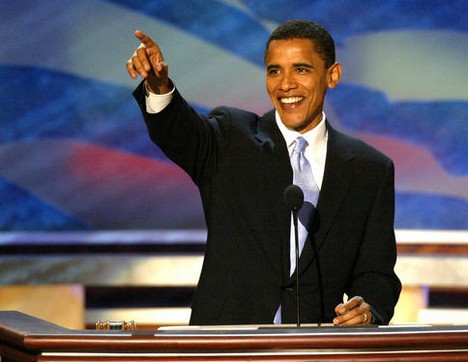
DENVER — Barack Obama accepted the Democratic presidential nomination on Thursday night with a scathing assessment of John McCain and a searing indictment of the Bush administration, promising to repair "the broken politics of Washington" and preside over a more prosperous and equitable America.
Speaking to a rapturous audience of about 80,000, the largest convention crowd ever assembled, Obama delivered an address that was alternately outraged and uplifting, personal and political.
He blasted President Bush and McCain, the presumptive Republican nominee, with some of his harshest language of the campaign, painting a grim picture of economic hardship: rising unemployment, falling wages, plunging home values and rising costs for gasoline and college tuition.
"Tonight," Obama said, speaking from a specially constructed soundstage on the floor of Denver's Invesco Field, "I say to the American people, to Democrats and Republicans and Independents across this great land — enough! This moment — this election — is our chance to keep, in the 21st century, the American promise alive."
In a 40-minute speech, Obama rode a line between policy and personal revelation, between high-flown oratory and an elbow-grease appeal to the working class voters who have stubbornly eluded him throughout the campaign.
He slapped McCain even as he called for an end to Washington's partisan politics, including appeals for common ground on some of the nation's most contentious issues: abortion, gay rights, gun control and immigration.
And he addressed nearly every major criticism of himself and his campaign head-on.
After a passing salute to McCain and his heroic military service, Obama scorched his rival on issues of policy and judgment.
"I don't believe that Senator McCain doesn't care what's going on in the lives of Americans," he said. "I just think he doesn't know." And: "John McCain likes to say that he'll follow bin Laden to the Gates of Hell — but he won't even go to the cave where he lives." And "John McCain has voted with George Bush 90 percent of the time. ... I don't know about you, but I'm not ready to take a 10 percent chance on change."
Obama salted his speech with the stories of people he met on the campaign trail, suggesting he was not as exotic or distant as his mixed-race background and cool demeanor sometimes suggests.
Obama pledged "to end this war in Iraq responsibly and finish the fight against al-Qaida and the Taliban in Afghanistan;" vowed to wean the U.S. from Middle Eastern oil in a decade, and cut taxes "for 95 percent of all working families," and he said he'd pay for it all in the budget.
He declared himself "not the likeliest candidate for this office. I don't fit the typical pedigree, and I haven't spent my career in the halls of Washington." But he challenged McCain on issues domestic and foreign, declaring "If John McCain wants to have a debate about who has the temperament, and judgment, to serve as the next commander-in-chief, that's a debate I'm ready to have."
Melding his signature line and his rival's convention theme, Obama said the nation's troops "have not served a Red America or a Blue America — they have served the United States of America. So I've got news for you, John McCain: We all put our country first."
For the most important night of his political career, Obama chose a setting as audacious as his candidacy itself: a raised blue-carpeted platform at the center of a football stadium, with a backdrop of Greco-Tuscan columns and more than a dozen American flags. The campaign surrounded the stage with a multi-ethnic rainbow of delegates and filled the stands with ticket lottery winners, striving for an image at once mammoth and intimate.
The stadium fell whisper-silent as Obama's video of introduction played, a gentle, cool breeze lifting the American flags in the hands of rapt audience members.
Republicans mocked the spectacle, calling it further proof the Democratic nominee was an empty-suited celebrity smitten with himself. McCain was hoping to steal back a bit of the limelight today by announcing his vice presidential pick.
Whatever happens in November, the night presented a testimonial to racial progress in America, a nation founded by slave owners and cleaved by civil war and more than a century of acrimony that followed.
Less than 50 years after African-Americans were prevented from voting in some states, Obama became the first African-American to accept the presidential nomination of one of the country's two major political parties.
Adding to the historic resonance, Obama delivered his speech on the 45th anniversary of the Rev. Martin Luther King Jr.'s "I Have a Dream" address. "Let freedom ring from the snowcapped Rockies of Colorado!" King said that day; Obama's triumph, standing in the shadow of those mountains, suggested the country was closer to the colorblind society King saw in 1963 from the steps of the Lincoln Memorial.
Democrats hardly mentioned the historic nature of Obama's nomination for most of the night, until the candidate himself, at the end of his speech, borrowed the 45-year-old words of the man he called "the preacher."
As Obama quoted Martin Luther King: " 'We cannot walk alone,' the preacher cried. 'And as we walk, we must make the pledge that we shall always march ahead. We cannot turn back.' "
"America," Obama concluded, "we cannot turn back. We cannot walk alone. At this moment, in this election, we must pledge once more to march into the future. Let us keep that promise — that American promise — and in the words of Scripture hold firmly, without wavering, to the hope that we confess."